Sales roleplay scripts: 10 scenarios ready to run and a rubric to grade them
A sales roleplay is a rehearsal of a sales conversation before you have it with a real customer: a colleague plays the buyer, an observer takes notes, then you talk it through. The ten sales roleplay scripts further down, from a cold call to greeting a customer in store, each give the context, the buyer's character and opening line, the seller's goal and what the observer should watch for.

What a sales roleplay is.
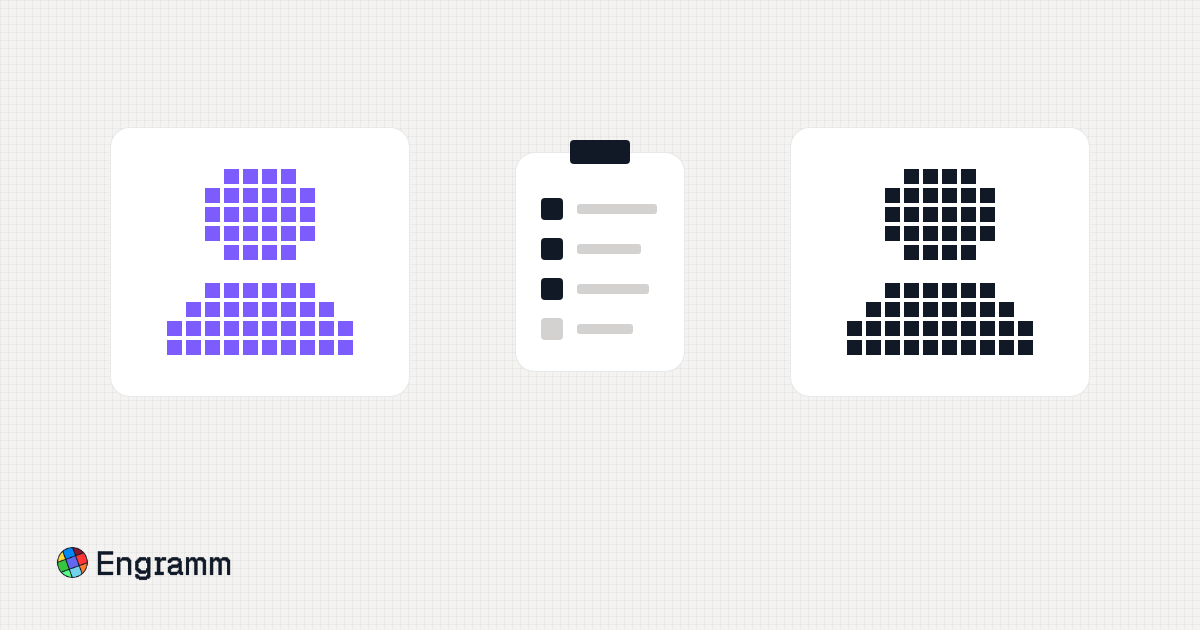
A sales roleplay recreates one specific moment of a sale, such as a prospecting call or a negotiation. The seller runs the conversation as they would with a customer. Across the table, a colleague plays the buyer from a card that describes the buyer's situation and what they won't volunteer. A third person watches without stepping in and writes down the lines that will come up in the debrief.
You'll also hear role play, sales simulation or mock call. Teams use it in training, during onboarding, before a big meeting and in hiring.
In short
A seller, a colleague playing the buyer from a card and an observer replay one specific moment of a sale.
Why roleplay practice works.
A roleplay combines three things that training research has studied: seeing how something is done, practicing it, and getting feedback.
In 2005, Paul Taylor, Darlene Russ-Eft and Daniel Chan analyzed 117 studies on behavior modeling training, which means showing a behavior before having people practice it. The behaviors learned held up over time, and sometimes grew, while knowledge faded. Transfer to the job was better when participants saw both a good and a bad example, practiced on scenarios they had written themselves and set goals, and when their managers were trained too.
In 1996, Avraham Kluger and Angelo DeNisi pulled together 607 measurements of how feedback affects performance. On average, it improved performance, but in more than a third of cases it made it worse. According to them, feedback helps less the more it shifts attention away from the task and toward the person. “You lack confidence” targets the seller; it works better to describe what they did, for example “you presented the product before finding out what was wrong.”
In 2013, Scott Tannenbaum and Christopher Cerasoli combined 46 samples on debriefs, 2,136 people in all. Groups that went back over what they had just done performed about 25% better on average, in simulations as well as real settings, whether the debrief was done as a team or alone. The effect seemed stronger with a facilitator and with a clear structure.
In short
People improved more with a good and a bad example shown before practice, situations taken from the field and a debrief on what the seller did.
Preparing the session.
A session covers one situation and one or two skills, for example getting a meeting when the prospect says they already have a vendor. With a goal like “work on prospecting,” nobody can tell at the debrief whether it went well.
Start from what the team has been through: a recorded call, a lost deal, an objection heard last week. Have the reps write the scenario themselves, which helped transfer to the job in Taylor's analysis.
Each person gets a card and reads only their own. The seller's card gives the context and the goal, the observer's card holds the rubric. The buyer's card describes the character and what they only reveal if asked the right question. To work on discovery, it can also give the buyer a dominant buying motive, as in the exercise from our guide to the SONCAS method.
To start, the trainer or an experienced rep plays the opening of the scenario twice, badly and then well, and the group says what changed; allow five minutes. Then split into groups of three.
In short
Pick a situation the team has been through, write one card per role, show a good and a bad example, then play in groups of three.
Playing and debriefing.
Allow about 25 minutes per round, then roles rotate so everyone gets to play the seller.
| Step | Time | What happens |
|---|---|---|
| Reading the cards | 3 min | Everyone reads their own card. The seller can ask about the context, not about the character. |
| Roleplay | 7 to 10 min | Play without interruption. The buyer stays in character, even if the seller struggles. The observer writes down exact lines. |
| Debrief | 10 min | The seller starts with what they think worked and what didn't, then the buyer says what made them open up or shut down. The observer finishes with the rubric. |
| Replay | 3 min | The seller replays the moment that got stuck, doing what they would do differently. |
In the debrief, the observer quotes what was said, for example “when he mentioned his current vendor, you moved to pricing without asking what was missing.” They stick to two points, one that worked and one to change, so the seller knows what to replay.
A manager who runs the session stays in the observer's seat and moves from one group to the next.
In short
A round takes about 25 minutes, including ten minutes of debrief built on quoted lines; the seller finishes by replaying the moment that got stuck.
The evaluation rubric.
The same rubric works for every scenario. For each criterion, the observer checks done, partly done or not done, and writes down a line they heard.
| Criterion | What the observer checks | Example of a useful note |
|---|---|---|
| Opening | The reason for the conversation is stated in one sentence, tied to the customer's situation | “Spent a minute presenting the company before asking a question.” |
| Questions | Open questions about the customer's problem and what it costs them, beyond the need they state | “Four open questions, none about what the problem costs today.” |
| Listening | The customer talks more than the seller during discovery; what they say gets rephrased | “Rephrased the timing correctly, nothing on budget.” |
| Arguments | Each argument answers a need the customer expressed and comes with proof | “Named three features, only one tied to what she had said.” |
| Objections | The cause is explored before answering; every concession gets something in return | “Offered 5% off without asking for anything back.” |
| Next step | The conversation ends on a specific next step: a date, a person, an action | “Ended on ‘I'll call you back’ with no date.” |
| Scenario point | What the scenario card asks the observer to watch | Depends on the scenario |
Template to download: roleplay rubric and character cards
The observer's rubric, then a seller card, a buyer card and an observer card to fill in for your own scenarios, as a two-page PDF.
In short
The rubric has six shared criteria and one point specific to the scenario, each noted with a line heard.
10 sales roleplay scenarios ready to run.
The first eight scenarios happen on the phone or in meetings, the last two at a trade show and in a store. For each one, the observer notes the points listed on top of the rubric. Companies and numbers are examples, to replace with your own.
Cold call
- Context
- You sell fleet management software and you're calling the director of operations at a 120-employee trucking company. All you have is his name.
- The character
- Mike picks up between two meetings and cuts you off as soon as you pitch the product: “we already have a tool.” Asked what's eating up his time, he relaxes and ends up saying his contract runs out in March.
- Seller's goal
- Book a 30-minute meeting on a specific date, without pitching the product over the phone.
- Opening line
- “Yeah, this is Mike. What's this about? I'm walking into a meeting.”
- The observer notes
- How the seller responds to “we already have a tool,” and whether they find out when the contract ends.
First discovery meeting
- Context
- The VP of Sales at a medical equipment distributor downloaded a white paper about your CRM and agreed to a 45-minute video call.
- The character
- Sarah talks freely but stays vague: she wants “more visibility.” If you dig, she explains that two major accounts left last year with a rep who kept everything in his own files. She has no approved budget.
- Seller's goal
- Get her to spell out the problem, what it costs and who decides, before talking about the product.
- Opening line
- “OK, go ahead, walk me through your solution.”
- The observer notes
- The minute the product comes up; who puts a number on the lost accounts, the seller or Sarah herself.
Pitching the offer to a decision-maker
- Context
- Second meeting with a group of twelve hotels whose teams spend hours on staff schedules. You're presenting the offer to the CFO, who missed discovery.
- The character
- David reads his email at first and cuts in as soon as a feature comes without a number. He has the budget, but will have to defend the spend in front of the executive committee with numbers: hours saved, the cost of scheduling mistakes.
- Seller's goal
- Make three arguments at most, each tied to a problem raised in discovery and backed by proof, then get his agreement to a priced proposal.
- Opening line
- “Just so you know, I've got twenty minutes. How much is this going to save us?”
- The observer notes
- Whether the seller answers David's question with a number or with a list of features.
Objections and closing
- Context
- Your proposal has been with the customer for ten days. You're calling to close.
- The character
- Nadia, buyer for a 30-store retail chain, objects to the timeline, then to a competitor “that does the same thing,” then says “I need to talk to my boss.” Only the last one is serious, because the budget isn't approved; she only says so if asked what's missing to decide.
- Seller's goal
- Find out what each objection hides before answering it, then get a meeting with her boss or a decision date.
- Opening line
- “Yeah, I went through your proposal. There are a couple of things I'm not comfortable with.”
- The observer notes
- Every objection the seller answers without asking a question first.
Holding your price with a buyer
- Context
- You're renewing a $200,000-a-year contract with a manufacturer, and the buyer has received a competing offer 15% cheaper.
- The character
- Phil, measured on the savings he gets, opens with an ultimatum, then leaves long silences. On the plant floor, the people who use your solution want to keep it, but he won't bring that up. He accepts the price if you give him something to justify it to his management.
- Seller's goal
- Hold the price, or give ground only in exchange for something (term, volume, reference), bringing the comparison back to total cost.
- Opening line
- “I'll be straight with you. I've got a quote 15% under yours. Can you match it or not?”
- The observer notes
- What the seller does during Phil's silences. The observer also writes down the final price.
Announcing a price increase
- Context
- Your prices go up 6% on January 1. You're calling a customer who has been with you for eight years, before the official letter goes out.
- The character
- Jim, who runs a 25-person company, takes it badly, gets offended and brings up a competitor who reached out to him. Without saying so, he mostly cares about keeping a contact who knows his business. He calms down if the increase is explained simply, along with what he got this year.
- Seller's goal
- Announce the increase in the first two minutes, without apologizing or over-explaining, and offer no discount unprompted.
- Opening line
- “Hey, long time no talk. What's going on?”
- The observer notes
- How much time goes by before the 6% figure is said out loud.
Reconnecting after a prospect goes silent
- Context
- Six weeks after a good demo and your proposal, two follow-up emails have gone unanswered. The customer finally picks up.
- The character
- Claire, marketing manager, is embarrassed and tries to cut the call short. The project has been on hold since her director left, and his replacement starts next month. She gets interested again if the seller brings something new, such as a case study close to her situation.
- Seller's goal
- Understand what changed, without blame, and agree on a next step, even if it's dropping the project.
- Opening line
- “Oh, hi. Yeah, sorry I never got back to you, it's been crazy around here.”
- The observer notes
- The tone of the seller's first sentence, then what they learn about the director leaving.
Moving from a technical contact to the decision-maker
- Context
- For three months you've been talking to the manufacturing engineering manager at a machined-parts manufacturer. The decision belongs to the plant manager, whom you've never met.
- The character
- Karim cares about his role and is afraid of being bypassed. Asked directly for a meeting with his plant manager, he answers “I'll pass it along.” He sets up the meeting if the seller offers to prepare it with him and leave him the technical side.
- Seller's goal
- Get a meeting with the plant manager, with Karim's support.
- Opening line
- “So I passed your docs around internally. Technically, it checks out.”
- The observer notes
- The role given to Karim, and the moment the seller moves to what a plant manager cares about: costs, lead times, risks.
Qualifying a prospect at a trade show
- Context
- At your company's booth at a trade show, a visitor stops in front of the demo screen. You have three to five minutes.
- The character
- An operations manager at a logistics company, polite, “just seeing what's out there.” He'll replace his tool in six months and make the call himself, but only tells a seller who asks about his business. If you recite the brochure, he walks off.
- Seller's goal
- Find out whether he has a project, on what timeline and who decides, then book a meeting or let him go.
- Opening line
- “Just walking the floor, thanks.”
- The observer notes
- The seller's first sentence (a question or a pitch) and the three pieces of information obtained: project, timeline, decision-maker.
Greeting a customer in store
- Context
- Saturday afternoon at an appliance store. A customer has been looking at washing machines for two minutes.
- The character
- She has compared prices online. Her washer broke down on Thursday, she needs fast delivery and she's torn between two models, but she waits to be asked before saying any of it.
- Seller's goal
- Make contact without pushing, discover her need and steer her to the right model, delivery included.
- Opening line
- “I'm good, just looking.”
- The observer notes
- How many questions the seller asks before recommending a model.
For scenarios 5 and 6, our use case on the “it's too expensive” objection explains how to train a team on it. Scenario 8 is typical of selling technical products in manufacturing, and the page on training in-store sales associates describes other customers for scenario 10, from the undecided browser to the rushed customer.
In short
In all ten situations, from a cold call to greeting a customer in store, the buyer keeps one piece of information to themselves, and the seller has to get it by asking the right questions.
Mistakes that make a roleplay fail.
The colleague playing the buyer tends to make the character tougher and pile on objections, so the seller mostly learns to take hits. Others are too accommodating and sign after five minutes. The character card limits both, since it says what shuts the buyer down and what opens them up.
A vague scenario, like “a difficult customer” with no company or goal, leaves the players improvising, and at the debrief nobody knows what success looked like.
In the debrief, “that was good” teaches the seller nothing, and a judgment about the person can lower performance, as we saw above. After ten remarks in a row, the seller doesn't know where to start.
In front of the whole team, the seller plays to the room and mostly tries to save face.
A roleplay played once, during training, rarely changes habits: what isn't revisited fades quickly, as our guide to the forgetting curve explains. Replaying the scenario two or three weeks later, with a variant of the character, shows what stuck.
In short
Sessions that fail tend to have a caricatured buyer, a vague scenario, a debrief that judges the person, too big an audience or no follow-up.
Letting AI play the buyer.
Among colleagues, every round ties up a buyer and an observer. A manager with eight reps can't play the customer for each of them before every important meeting, and sessions quickly become rare.
When AI plays the buyer, the rep practices alone and out loud, the night before a meeting if needed. In Engramm's AI roleplays, each card in this article can become a scenario, with the rubric's criteria used to grade the conversation. The rep gets a scorecard, then an AI coach goes over their answers with them. The manager still picks the scenarios and runs the debrief.
Adecco took this approach with 65 sales reps in France, on six prospect profiles drawn from real situations, after a half-day in the classroom. With the same number of meetings, they produced 6% more sales proposals, as their regional sales director explained in the webinar on Adecco's experience.
In short
AI plays the buyer as often as needed and grades the conversation on the rubric's criteria; at Adecco, reps trained this way produced 6% more sales proposals.
Frequently asked questions.
What is a sales roleplay?
A sales roleplay puts a seller in a recreated sales conversation so they can practice or be assessed. A colleague plays the customer from a character card, an observer takes notes, and the conversation is debriefed right after. Teams use it in training, onboarding, before important meetings and in sales job interviews.
How do you run a sales roleplay?
Pick a situation from the field and write one card per role: seller, buyer, observer. Play for seven to ten minutes, debrief for ten minutes on quoted lines, have the seller replay the moment that got stuck, then rotate roles.
What is a sales roleplay in a job interview?
The recruiter plays a customer and asks the candidate to run a prospecting call, a discovery meeting or a negotiation. They mostly watch how the candidate asks questions, listens and closes, and grade every candidate on the same rubric to compare them. Scenarios 1, 2 and 5 work well for this.
What are some examples of sales roleplay scenarios?
You can play a cold call to a busy decision-maker, a first discovery meeting, a pitch to a CFO, a negotiation with a buyer asking for a discount, a price increase announcement, qualifying a visitor at a trade show or greeting a customer in store. Outside sales, a manager can rehearse a difficult conversation, and a customer service agent a complaint.
Sources.
- Paul J. Taylor, Darlene F. Russ-Eft and Daniel W. L. Chan (2005), “A meta-analytic review of behavior modeling training”, Journal of Applied Psychology, 90(4), 692-709: pubmed.ncbi.nlm.nih.gov
- Avraham N. Kluger and Angelo DeNisi (1996), “The effects of feedback interventions on performance: A historical review, a meta-analysis, and a preliminary feedback intervention theory”, Psychological Bulletin, 119(2), 254-284: doi.org
- Scott I. Tannenbaum and Christopher P. Cerasoli (2013), “Do team and individual debriefs enhance performance? A meta-analysis”, Human Factors, 55(1), 231-245: pubmed.ncbi.nlm.nih.gov