Reach the decision maker: from your technical contact to the person who signs
To reach the decision maker in a complex sale, a rep usually goes through the technical contact they have been working with so far, and needs that person's support. Then they have a few minutes to talk to the decision maker about what matters to them: cost, timing, risk. The scenario here has your reps play both meetings.

- For
- Sales engineers, account managers and enterprise account executives
The situation.
In a complex sale, the early conversations often happen with a technical or operational contact, such as a maintenance, engineering or IT manager. They know the subject, test the solution and are happy to talk about it. The spending decision, though, belongs to someone else, a CFO or a general manager the rep has never met.
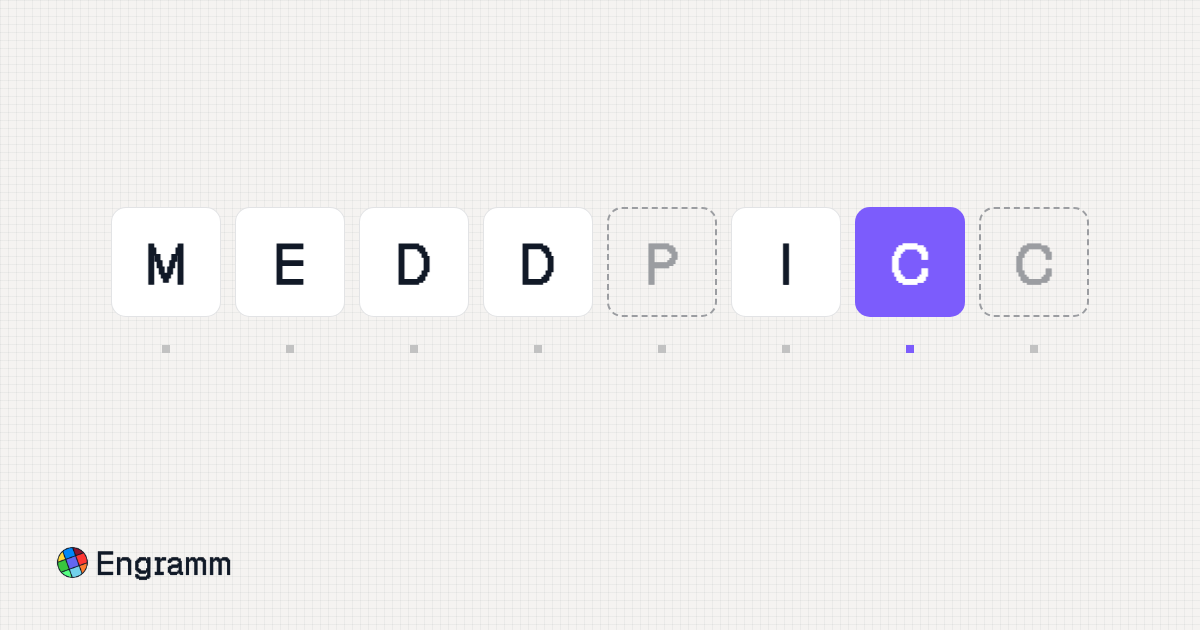
Until that person has heard what the project does for them, the deal stalls. The rep has to get the meeting with their contact's support, then hold the decision maker's attention for a few minutes. MEDDIC calls this person the economic buyer, and the technical contact can become the champion who backs the offer internally; the MEDDPICC guide covers both roles.
In short
The rep has won over a technical contact, but the spending decision belongs to someone they have never met.
What makes it hard to reach the decision maker.
Asking to meet the director amounts to telling your contact that they don't decide. Worded carelessly, the request offends them. They answer “I'll pass it on” and nothing happens, or they slow the deal down to keep control of the project.
With the technical contact, the rep has talked about sensors, integration and configuration. The decision maker wants to know what the project costs, what it brings in, how fast, and what could go wrong. Sometimes the switch happens in the middle of a call, when the director drops into the meeting.
If discovery with the technical contact covered only the technical need, the rep has nothing to tell the decision maker about what the problem costs the company. The use case on the first discovery meeting shows how to get a prospect talking about those consequences.
In short
Asking for an introduction can offend the technical contact, and the decision maker expects a different conversation from the one held so far.
What the research says.
According to a 2016 press release from CEB (now part of Gartner), the number of people involved in a B2B purchase rose from 5.4 in 2014 to 6.8 in 2016. The same release states that 51% of customers who might be willing to buy from a supplier are not willing to advocate for them.
A technical contact who liked a trial won't necessarily make the case to their leadership. The rep has to give them the means to do it, such as figures the decision maker will recognize, or get to present the project with them. The release does not describe the survey's methodology.
In short
According to CEB, a B2B purchase involved 6.8 people in 2016, and one customer in two who was willing to buy was not willing to advocate for the supplier.
The scenario to play, in two parts.
The rep sells an energy monitoring solution for buildings. For three months, they have been working with the technical manager of a home improvement chain.
Part one: with the technical manager
| Element | In the scenario |
|---|---|
| The character | Helen, energy and maintenance manager at a chain of 45 stores. Competent and invested in her project, she distrusts reps who “go over her head.” |
| Her context | A three-month trial in two stores went well. Rolling it out to all 45 stores requires an investment only the CFO can approve. |
| What she says up front | “Technically, it's fine, the trial worked well. I'll figure out how to present it internally.” |
| What she keeps to herself | Two years ago, the CFO turned down a similar project she was championing, for lack of ROI figures. The year's investments are decided by a committee in March. The finance team has each store's energy bill. |
| What gets her on board | An offer to build the business case for the CFO together, leaving her the technical part, and a question about what was missing two years ago. |
| The rep's goal | Get a thirty-minute meeting with the CFO before the March committee, with Helen in the room. |
Part two: with the CFO
| Element | In the scenario |
|---|---|
| The character | Mark, CFO. Courteous and busy, he judges a project on its numbers and cuts technical detail short. |
| What he says up front | “I have ten minutes. Helen spoke well of your trial. How much does it cost, and what's the payback period?” |
| What he keeps to himself | The energy supply contract is up for renegotiation in the fall, and he is looking for savings to present to the board. He worries that store managers will ignore the alerts. |
| The rep's goal | Present two or three results from the trial in his terms, address store adoption, let Helen present the technical part, and get the project on the March committee's agenda. |
Variations change the characters: a technical manager who refuses any introduction, or a general manager who gives only five minutes.
In short
The rep first gets Helen's support and a meeting with the CFO, then holds ten minutes with him using the trial's numbers.
The rubric.
| Part | Criterion | What to look for |
|---|---|---|
| 1 | Helen's role | The rep acknowledges her work and builds on it |
| 1 | Reason for the meeting | The request is justified by what it does for Helen and her project |
| 1 | Past rejection | The rejection two years ago is uncovered and taken into account |
| 1 | Joint preparation | A business case built together, with a role for Helen in the meeting |
| 1 | Commitment | A dated meeting before the March committee, with Helen |
| 2 | Opening | One sentence about what matters to the CFO, with no technical detail |
| 2 | Numbers | The trial results, scaled to the energy bill of all 45 stores |
| 2 | Objection | The concern about store managers is uncovered and addressed |
| 2 | Helen's place | She presents the technical part |
| 2 | Next step | The project is on the March committee's agenda |
Template to download: two-part scenario sheet and scorecard
The trainer's sheet, with what Helen and Mark keep to themselves, then the observer's scorecard, five criteria per part, as a two-page PDF.
In short
Five criteria per part, on the relationship with the technical contact, then on the conversation with the decision maker.
The scenario in Engramm.
In Engramm's AI roleplays, the two parts become two simulations on the same company. The rep first practices with Helen, who only opens up if the rep leaves her room, then with the CFO, who cuts the conversation short as soon as it turns technical. Both characters respond by voice, in under 500 ms. The scorecard rates the relationship with the technical contact, how clearly the rep moves to financial topics and the conversation with the decision maker. The AI coach then suggests ways to ask for an introduction without creating tension.
In short
Two simulations on the same deal, each with its own scorecard.
Frequently asked questions.
How do you find out who the decision maker is?
Ask how similar projects were decided: “The last time you invested in a project this size, how did the decision go?” The answer gives you the name of the person who approved the spend, and often the committee the project will have to go through.
How do you ask to meet the decision maker without upsetting your contact?
Present the meeting as a way to get their project approved, offer to prepare it with them and give them a role in it, such as presenting the technical part. Also ask what got in the way the last time they took a project to leadership.
What do you say to a decision maker in a first conversation?
Open with one sentence about what matters to them, then give two or three figures from their own company, such as trial results. Keep technical detail for their questions, and close on a specific decision to make, with a date.
Sources.
- CEB, “Leading B2B Sales Organizations Challenge, Align & Prescribe To Get Deals Done”, press release, November 21, 2016: prnewswire.com